


Arrested for OUI near Franklin, MA? Learn the step-by-step process, the critical RMV hearing window, and why acting fast protects your license and case.

Learn about the criminal defense process in Framingham, including court procedures, timelines, and what to expect when facing charges in Massachusetts.

Learn how Newton parents can identify quality legal representation for special education disputes, IEP issues, and other school-related challenges.

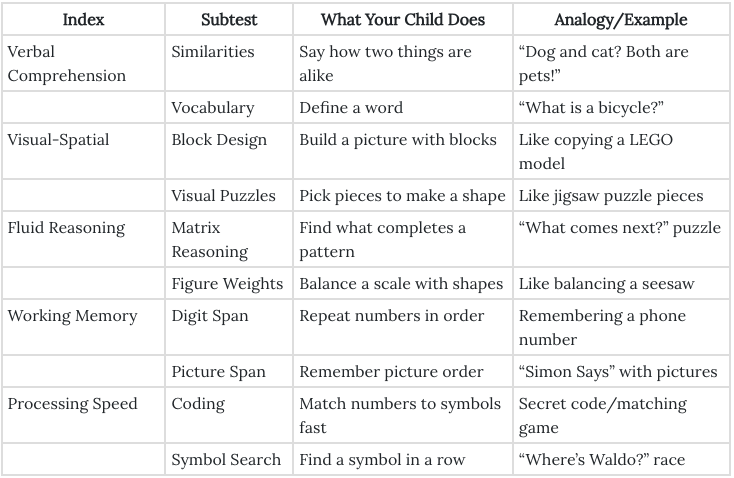
The term informed consent is tossed around frequently in special education—but parents are often left wondering: “What am I really entitled to know before I sign off?” The federal and state definitions may surprise you. According to federal law (34 CFR § 300.9), consent means that the parent: Has been fully informed of all information relevant to the activity for which consent is sought, In their native language or other mode of communication, and Understands and agrees in writing to carry out the activity. Massachusetts law, under 603 CMR 28.02(4), mirrors this but goes further, requiring that the parent understands the information and knows their consent is voluntary and revocable at any time. So, what does “fully informed” mean? That’s where nuance matters. The Office of Special Education Programs (OSEP) has clarified that parents need only have a general understanding of the proposed action—not a deep technical breakdown of every detail. In legal terms, this means understanding what is relevant to the decision at hand. What Is “Relevant” Information? In both law and common sense, relevance is about whether something matters to the decision you're being asked to make. In legal terms: It must make a material fact more or less likely to be true (see Laccetti v. Ellis, Gath v. M/A-Com). It must logically connect to a question that affects your child’s services or placement. If a school proposes an evaluation with six components but only conducts four, asking why the other two were omitted is relevant—because it could affect whether the evaluation provides a complete picture of your child's needs. Red Flags to Watch for: From Referral to Placement 1. Evaluation Requests: Ask What You’re Getting—and What You’re Not Before consenting to an evaluation: Ask for a description of each assessment. Clarify if any typically used subtests are being omitted, and why. Request examples of what the test measures and how it will be used. Avoid confrontational language. Try: “I’m not trying to delay anything—I just want to understand what’s being measured and why some parts may have been left out. Can you help me understand the relevance of each?” 2. IEP Goals: Ask How They Were Chosen When you’re reviewing IEP goals, ask: Were the goals based on the most current data? Do they directly connect to the evaluations or identified needs? Do they reference a method of instruction, or deliberately avoid naming one? If an IEE recommended a specific methodology (e.g., Orton-Gillingham for dyslexia or DTTC for apraxia), ask: “Given the IEE’s findings, I’d like to know why a different approach was chosen. What data supports the effectiveness of the selected method for my child’s profile?” Services Must Be Based on Peer-Reviewed Research—To the Extent Practicable Federal law (34 CFR § 300.320(a)(4)) requires that the IEP includes: “A statement of the special education and related services and supplementary aids and services, based on peer-reviewed research to the extent practicable…” Most parents aren’t aware they can—and should—ask: “Is this service or approach supported by peer-reviewed research?” “Could you provide a source or summary of research that shows this method is effective for children like mine?” This isn’t being difficult—it’s your right. And it helps the team stay accountable. Placement: Understanding the Peer Group One of the trickiest issues is group appropriateness—especially in districts that are understaffed. If your child is in a group setting, but their needs are significantly different from their peers, you have the right to ask how the grouping benefits your child. The Andover Case: A Tool Parents Can Use In Andover Pub. Schs., 117 LRP 17110 (SEA MA 04/20/17), the hearing officer ruled that: Parents can request sanitized IEPs (i.e., redacted of all identifying information) of proposed peers to assess appropriateness. FERPA does not block the release of de-identified IEPs. This means that if you're told a program is “a good fit” for your child, you can ask: “Could we see de-identified IEPs of the peer group to better understand the instructional levels being targeted?” Wrapping Up: Stay Curious, Stay Focused Informed consent is not about becoming an expert on educational methodologies or neuropsych testing. It’s about being empowered to: Ask why a service is recommended. Understand how your child’s needs are being met. Spot when things don’t add up—and push for clarification respectfully. Most importantly, it’s about framing questions around relevance, not resistance. When you tie your inquiry back to your child’s success, you're not being difficult—you’re being effective.

Discover key warning signs that indicate Needham parents should contact a special education attorney for their child's IEP disputes and educational rights.

Learn what Wellesley residents need to know when selecting criminal defense representation, including court procedures and local legal considerations.

Learn about your IEP rights as a Franklin parent, including meeting participation, evaluation timelines, and how to handle disagreements with your school district.

Learn what Franklin parents need to know when selecting a special education attorney for their child's IEP, evaluations, and school advocacy needs.

While adults have long known that children demonstrate a lack of maturity and underdeveloped sense of responsibility, leading to recklessness, impulsivity and heedless risk-taking, there is now scientific evidence that is recognized and accepted as true by the courts of this country: “Our decisions rest[] not only on common sense – on what ‘any parent knows’ – but on science and social science as well.” Miller v. Alabama, 132 S.Ct. 2455, 2464 (2012), quoting Roper v. Simmons, 543 U.S. 551, 569 (2005); see also Diatchenko v. District Attorney for the Suffolk District, 466 Mass. 655, 669 n.14 (2013). In short, before you assume your child will likely be found delinquent of a crime, you should consult with an experienced juvenile criminal defense attorney about the changing climate of juvenile criminal law.

You call your son’s school, tell the nice lady in the special education department that you suspect he has a learning disability and you want him evaluated. After a brief discussion about your concerns, you are told that you must provide the school with written consent before testing can commence. Not to worry, the helpful school official offers to mail you the form. She encourages you to return the signed form promptly so testing can begin. You anxiously await the form’s arrival in the mail. Three days later you receive the consent form. Attached to it is a post-it note instructing you where to sign. However, as you review the form, you notice that the section of the form entitled “list the recommended assessment(s)” is blank and that the “yes” box is checked for an “educational assessment,” a “health assessment” and a “psychological assessment.” You hesitate before signing. Your mother always warned you never to sign anything unless you understood it and you do not understand any of this educational jargon. However, you do not want to delay the testing. Should you sign it? The simple answer is your mom was right: You should not sign the consent form if you do not understand it. However, please know that you are not alone. Few parents understand that they have a right to make decisions about their child’s education based on “informed consent.” In Massachusetts, this means you have a right to be “fully informed of all information relevant to the activity for which consent is sought.” So, if the language appearing in the form leaves you asking questions, by all means, ask them! Indeed, ask questions until you and you alone are satisfied you have the information you need to make an informed decision. For example, consider asking for a list of all the assessments the school seeks to administer, a detailed description of each assessment and, to the extent the assessment has “sub-parts,” ask if any sub-part will be omitted from the testing. If so, ask them to explain the decision not to administer that sub-part. As a matter of fact, if you ever do not understand the school’s decision to administer or not administer an assessment or sub-part to an assessment, ask the school to provide you with an explanation for the decision. It’s your right! If your school responds that it is not required to explain itself, remind that school official that the legislative history for informed consent includes the following language: “A few commenters recommended adding a requirement to the definition of consent that a parent be fully informed of the reasons why a public agency selected one activity over another. Discussion: We do not believe it is necessary to include the additional requirement recommended by the commenter. The definition of consent already requires that the parent be fully informed of all the information relevant to the activity for which consent is sought.” In other words, to be “fully informed” a parent not only has the right to know whatassessment will be administered/not administered by the school, he or she also has the right to know why the assessment will be administered/not administered. So, don’t be shy. Ask, ask, ask……